
 judy
A peptide batch number is a unique code printed on the vial or label that ties that exact product to its production run, and it’s the single best tool you have for verifying what you’re holding. Look it up, match it against the records and test documentation from a supplier like https://kylopeptides.comand you can confirm where the product came from and how it was made in a few minutes. If the number is missing, mismatched or unverifiable, that’s your cue to stop and ask questions.
Think of it like a vintage label on a bottle of wine. The year tells you which harvest it came from, and a lot channels down from there. A batch number does the same job for a peptide, only with more precision: it points to one production run, one set of tests, one paper trail. Reputable suppliers make that trail easy to follow.
As our resident expert Jane Calona likes to say, a good label should answer questions, not raise them. This guide explains what a batch number is, why traceability matters, who can request records, and exactly what to do when something doesn’t add up.
What a Peptide Batch Number Is and How It Works Like a Vintage Label
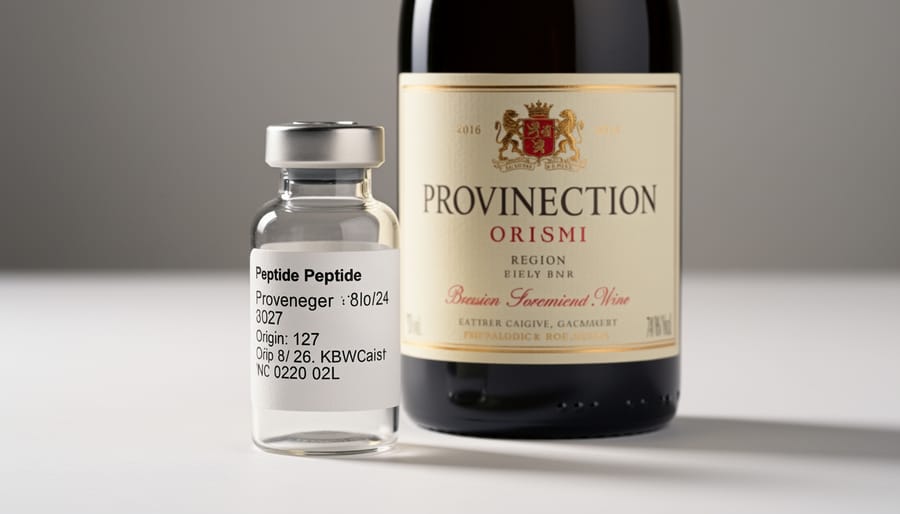
Reading the Label: What You Will Usually Find on a Vial or Box
Pick up a vial or its outer box and you’ll usually find a handful of small details doing a lot of work. Think of it like turning over a wine bottle to study the back label. Here’s what to look for, and how it compares to what you already know from the cellar.
| Label element | What it tells you | Why it matters | Wine-label comparison |
|---|---|---|---|
| Batch or lot code | The production run the vial came from | Lets any question be traced to one run | Vintage or lot number |
| Manufacture date | When the run was made | Shows how old the product is | Bottling date |
| Expiry date | The point after which quality isn’t assured | Guides whether it’s still suitable to use | Drink-by guidance |
| Storage instructions | How to keep the product stable | Poor storage can undo good manufacturing | Cellaring advice |
| Manufacturer details | Who made or packaged it | Gives you someone to contact | Producer and address |
One caution: formats vary by maker. One company might print a short string of letters and numbers, another a long code with a date built in, and some put the batch on the vial while others only list it on the box. Don’t assume a single universal structure. If a code looks unfamiliar, that alone isn’t a red flag, but you should be able to find one clearly printed and legible. Photograph it and keep the packaging, because that code is your link back to the product’s records.
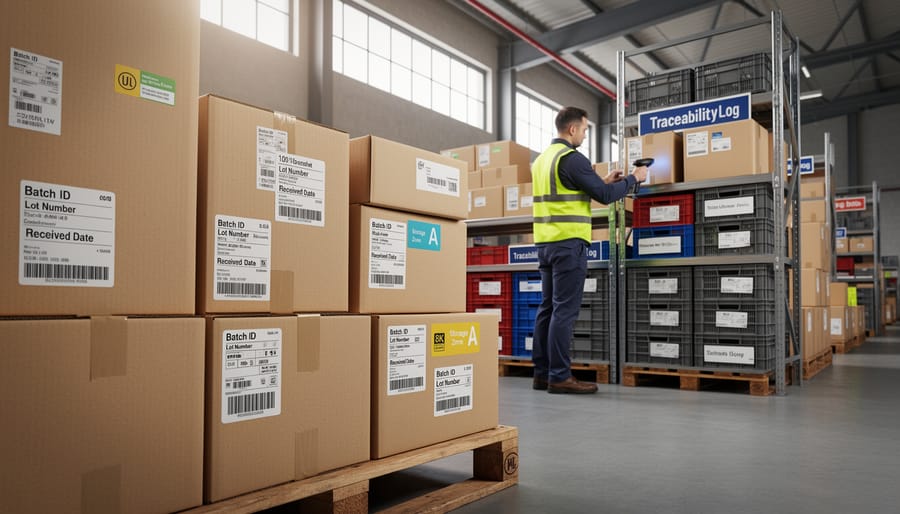
Why Traceability Matters for Safety, Quality and Recalls
Imagine a reader who orders the same peptide twice, a few months apart, and notices the vials carry different codes. One looks slightly different when mixed, and now she’s wondering why. That one detail is where traceability starts to earn its keep. Because each code points to a specific production run, she can ask the supplier for that run’s testing records and compare them, rather than guessing. It’s a lot like noticing that two bottles of the same wine taste different and checking the vintage on each label. Even a small shift between runs can explain the quality differences you’re seeing.
Traceability does a few practical jobs. It confirms a product is what it claims to be, because the code should match the supplier’s documentation. It links a reported problem to a single run, so a complaint about one vial can be checked against everything made under that code. If something goes wrong, it lets a maker or regulator find which units are affected and pull only those, instead of everything on the shelf.
It also helps you spot trouble. A missing code, a smudged one, or a code the supplier can’t verify is a reason to pause. Counterfeit and poorly made products often skip this step, since a real code means real records to answer to.
Who Can Request Batch Records and What Qualifies a Request
Think of asking for batch records the way you’d ask a winery about a particular vintage. A friendly cellar-door team will happily tell you where the grapes came from and when the bottle was filled. They won’t hand over every internal note from the winemaking process. Peptide manufacturers and suppliers work in much the same spirit.
Generally, the people with the strongest standing to ask are the original purchaser, a licensed healthcare professional acting on behalf of a patient, and a regulated business customer who bought the product through a formal supply arrangement. Regulators and official inspectors can usually go further, but that’s a separate channel from everyday consumer requests.
What you’re typically given is limited and practical: confirmation that the batch code is genuine, manufacture and expiry details, and often a certificate of analysis. Detailed production records, supplier contracts and proprietary methods are usually kept confidential, and that’s normal.
Access rules also vary by country, by product category (medicine, research material or supplement) and by supplier. So check the rules that apply to you, and don’t assume a right to full production records. A well-prepared request helps the supplier help you. Have these ready:
- The batch or lot code exactly as printed on the vial or box.
- Proof of purchase, such as an invoice or order confirmation.
- The supplier’s name and where you bought the product.
- The full product name and strength or size.
- Your specific question or concern, stated clearly.
A short, specific request with these details tends to get a faster and more useful reply than a general demand for “all records.”
Your Rights and Responsibilities as a Buyer or User
A legitimate supplier owes you a few basics. Expect clear labelling, a batch code you can actually read and retrieve, a certificate of analysis (COA) on request, and some way to report a problem. Think of it like a good winery: the vintage is on the label, and if you ask where the grapes came from, they can tell you.
Your side of the bargain matters just as much, and it’s easy to follow. Hold on to the packaging and the code until the product is finished, because a vial without its batch number is nearly impossible to trace later. Store it exactly as the label directs, since heat and light can undo a supplier’s careful work faster than you’d think. Snap a quick photo of the label when you open a new package, a habit that costs you five seconds and can save weeks of back-and-forth.
If something looks off, whether that’s odd packaging, a mismatched code or an unexpected reaction, report it promptly. Early reports help suppliers and regulators spot a problem before it spreads, much like flagging a corked bottle before the whole case goes out. Adopting a few simple best practices for storing and recording what you buy makes every one of these steps easier.
Finally, use any product only in ways that are legal and medically appropriate for you. Rules differ by country and product type, so there’s no shame in checking. A qualified healthcare professional is the right person to ask about whether and how to use a peptide, and a quick conversation beats guesswork every time.
How to Trace a Batch Step by Step
Tracing a batch is less mysterious than it sounds. Think of it like checking a bottle’s vintage against the winery’s records. You are simply confirming that what is in your hand matches what the maker says it should be. Here is a repeatable sequence.
1. Record the code. Photograph the batch or lot number, expiry date and product name before you open or discard any packaging. A smudged label is much harder to trace later.
2. Check it against the supplier’s documentation. Look for the same code on your invoice, order confirmation or the supplier’s website. If the supplier cannot find it, that is your first warning sign.
3. Request the COA. A certificate of analysis, or COA, is a document from a testing laboratory that reports what was measured in a specific batch. In plain terms, it answers two questions: is this the substance it claims to be, and how pure is it?
4. Compare the details. Put the COA beside your packaging and check that the product name, batch number and dates all line up. Look at who ran the tests and whether the report names a laboratory rather than just a logo. Check that the stated purity and identity results are actually given as numbers or findings, not vague praise like “high quality.” A COA for a different batch, or one with no batch number at all, tells you very little about your vial.
5. Escalate if anything does not match. Write to the supplier with your photos and the specific mismatch. If the answer is evasive or you have any health concern, move on to the official channels covered in the next section.
Keep every document together. A tidy record makes any follow-up conversation faster and far more productive.
Where to Get Help When Something Does Not Add Up
Sometimes you check the details and the numbers still don’t line up. The code on the vial doesn’t match the paperwork, or the product just feels off. That’s the moment to bring in someone else, and the right person depends on the problem.
- The supplier or manufacturer’s customer service can confirm a batch code, explain what the label means and supply a COA.
- Your pharmacist or healthcare provider can advise on safety, interactions and whether a product looks right for you.
- Your national medicines or food-safety regulator handles suspected counterfeits, quality defects and adverse reaction reports.
- Consumer protection bodies can help when a seller won’t respond, misrepresents a product or refuses a fair resolution.
Because rules differ from country to country, look up your own regulator rather than relying on a general contact. Most national agencies run a reporting channel for adverse reactions and suspected fake products, and many accept reports from ordinary consumers as well as professionals.
When you reach out, keep the packaging, photos of the label and your purchase details handy. A clear record of the batch code makes every conversation faster. Think of it like a sommelier tracing a puzzling bottle back to its vintage: the more precisely you can describe what you have, the sooner someone can help you.
Common Questions About Peptide Batch Numbers
Are batch numbers and lot numbers the same thing?
In most cases, yes. Many makers use the two terms interchangeably for a single production run, though some use “lot” for a packaged subset of a larger batch. Check how your supplier defines it.
Does a batch number prove a product is safe?
No. A batch number only identifies where a product came from and links it to its records. Safety and quality depend on what those records show, such as testing results on a certificate of analysis.
What if the code is missing or smudged?
Keep the packaging, take clear photos, and contact the supplier with your order details. A product with no readable code is hard to verify, so treat it with caution and ask a pharmacist or healthcare professional before using it.
Can the same peptide differ between batches?
It can. Small variations in raw materials, synthesis conditions or storage may affect purity or potency from one run to the next. That is exactly why each batch should have its own documented testing.
Think of it like vintages: two bottles of the same wine from different years can taste quite different, and a good label tells you which one is in your hand. If a supplier is vague when you ask any of these questions, that is worth noting. A reputable one will answer plainly and point you to the records.
A batch number is a small code with a big job. Much like the vintage on a wine label tells you where and when a bottle came from, a batch code ties a peptide vial to the exact production run behind it, along with the testing and records that go with it. That connection is what makes traceability worth caring about: when something looks off, there’s a trail to follow instead of a shrug.
So make it a habit. Check the code when a product arrives, keep the packaging and any paperwork, and don’t hesitate to ask your supplier or a qualified professional when something doesn’t add up. A few quiet minutes of record-keeping can spare you a lot of uncertainty later.
As a wine lover, I’ve always believed that the best enthusiasts are the curious ones who read the label, ask the question, and trust but verify. Bring that same curiosity here, and you’ll be well looked after.