 judy
Pairing wine with weeknight comfort food takes three simple steps: choose dishes that cook in under 30 minutes, select wines that complement rather than compete with rich flavors, and keep bottles accessible and affordable. The seven combinations ahead prove you don’t need a special occasion or culinary school training to enjoy thoughtful wine pairings at home.
After years of helping home cooks demystify wine selection, I’ve found that most people abandon pairing principles the moment dinner becomes rushed. They assume a proper pairing chart only applies to elaborate meals, not Tuesday night mac and cheese. That’s backward thinking. Comfort foods, with their familiar flavor profiles and satisfying textures, actually make ideal pairing practice because you already know what you’re tasting.
The pairings below focus on dishes you can realistically prepare on a busy evening. Mac and cheese partners beautifully with unoaked Chardonnay. Grilled cheese and tomato soup find balance with Pinot Noir. Sheet pan chicken thighs need only a chilled rosé. These aren’t aspirational recipes you’ll bookmark and forget. They’re meals you’re probably making already, elevated by strategic wine choices that cost less than most restaurant appetizers.
What makes these combinations work is structural harmony, not pretense. Creamy carbonara needs the bright acidity of Vermentino. Beef chili demands the bold fruit of Zinfandel. Pan-seared salmon thrives alongside Sauvignon Blanc’s citrus notes. Each pairing respects your time, your budget, and the simple pleasure of ending a long day with food and wine that genuinely complement each other.
How We Chose These Pairings
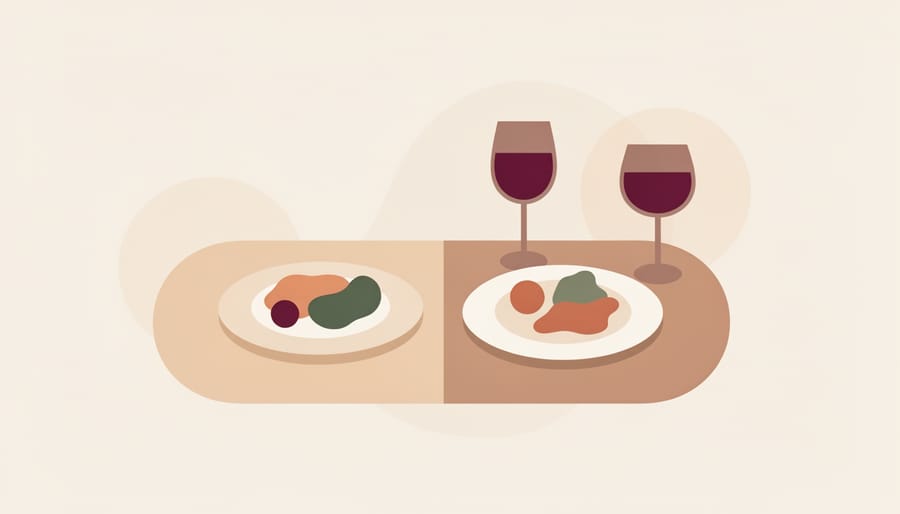
When I curated these seven pairings, I didn’t just grab my favorite comfort foods and match them with whatever wine was open on my counter. Each combination had to earn its spot by meeting specific, practical criteria that reflect how we actually cook and eat during the week.
Here’s what guided my selection:
- Preparation time under 30 minutes from start to plate, because weeknight cooking is about speed without sacrifice
- Ingredients you can find at any decent grocery store, no hunting for specialty items or making three stops
- Wine styles that enhance the dish rather than compete with it, keeping the pairing harmonious and approachable
- Versatility across skill levels, so beginners feel confident while experienced cooks find value in the nuance
My pairing philosophy centers on how to balance flavors without overthinking it. Comfort food already delivers richness, salt, and satisfaction. The wine’s job is to complement those qualities, cutting through fat with acidity, echoing spice notes, or providing a refreshing contrast. I deliberately avoided heavy, tannic reds that would bulldoze delicate flavors and skipped overly oaked whites that fight creamy sauces.
The result is a collection that works in real kitchens, with real schedules, using bottles you won’t need a wine degree to appreciate.
1. Mac and Cheese with Unoaked Chardonnay
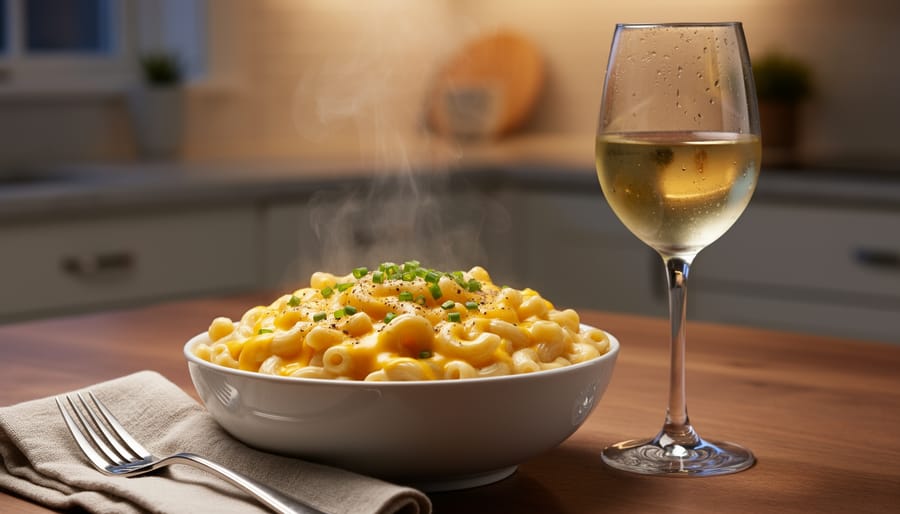
Nothing beats creamy mac and cheese when you need comfort on a weeknight, and pairing it with the right Chardonnay transforms this simple dish into something special. A stovetop version takes just 20 minutes from start to finish, boil your pasta, make a quick roux with butter and flour, add milk and sharp cheddar, then toss everything together.
The key to this pairing is choosing an unoaked Chardonnay, sometimes labeled as “naked” or “unwooded” on the bottle. These wines skip the barrel aging that gives some Chardonnays that heavy, vanilla-butter character. Instead, you get bright acidity with crisp apple and citrus notes that slice through the cheese sauce’s richness. Think of it as a palate cleanser built right into your meal.
At the same time, unoaked Chardonnay has enough body and subtle creaminess to mirror the texture of your mac and cheese without fighting it. The wine’s natural buttery quality (from malolactic fermentation, if you’re curious) echoes the dish’s indulgent feel while the acidity keeps each bite from becoming overwhelming.
When shopping, look for Chardonnays from Chablis in France or cooler California regions like Monterey. These typically offer that fresh, mineral-driven style. Australian Chardonnay can work too, just check the label or ask at the wine shop if it’s been aged in oak. A bottle in the $15-25 range will do the job beautifully.
One practical tip: serve the wine slightly chilled, around 50-55°F. Too cold and you’ll mute the flavors that make this pairing work. Pour a glass, take a bite of that gooey comfort, and notice how the wine refreshes your palate for the next forkful. That’s the magic of getting acidity and richness in balance.
2. Grilled Cheese and Tomato Soup with Pinot Noir
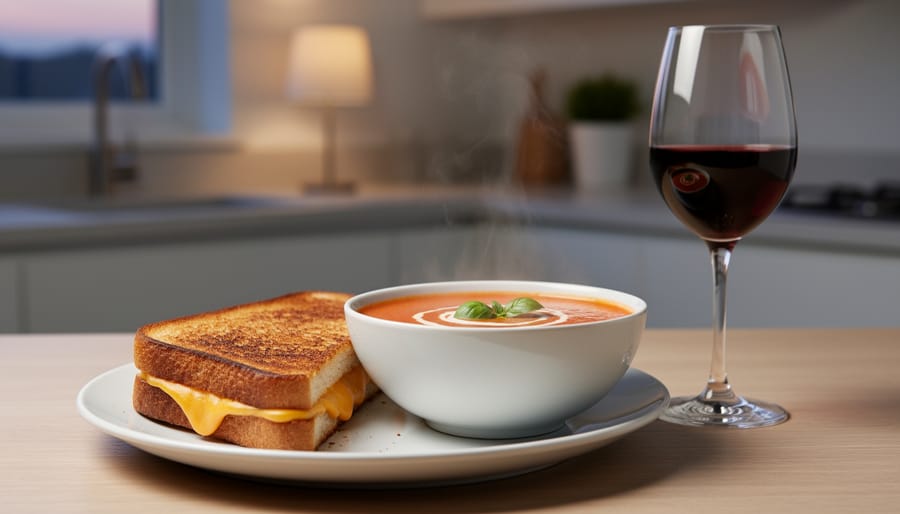
This childhood favorite deserves better than American singles and white bread. Upgrade to sourdough or country loaf with a combination of aged cheddar and Gruyère, and you’ll transform a simple sandwich into something worthy of a light-bodied Pinot Noir.
The pairing works because Pinot Noir acts as a bridge between two contrasting elements. The tomato soup brings acidity and sweetness, while the grilled cheese delivers fat and savory depth. A good Pinot Noir from Oregon or Burgundy offers enough acidity to echo the tomatoes without fighting them, plus subtle red fruit notes that complement rather than compete with the cheese’s complexity. The wine’s silky texture mirrors the melted cheese, creating what I call textural harmony, when both food and wine feel similar on your palate.
For the soup, a quick stovetop version with canned San Marzano tomatoes, a splash of cream, and fresh basil takes 15 minutes. The grilled cheese cooks in under 10 if you use medium heat and cover the pan to help the cheese melt evenly. Total time: 25 minutes from start to sitting down.
This pairing shines at lunch or dinner because Pinot Noir is versatile enough for midday drinking without feeling heavy. Its moderate alcohol content and bright fruit character won’t weigh you down the way a bolder red might. Understanding cheese and wine fundamentals helps here, aged cheeses need wines with enough structure to stand up to them, while the soup’s acidity requires a wine that won’t taste flat beside it.
Look for Pinot Noirs labeled “light-bodied” or from cooler climates. They’ll have the freshness this pairing needs without overwhelming your comfort food.
3. Sheet Pan Chicken Thighs with Rosé
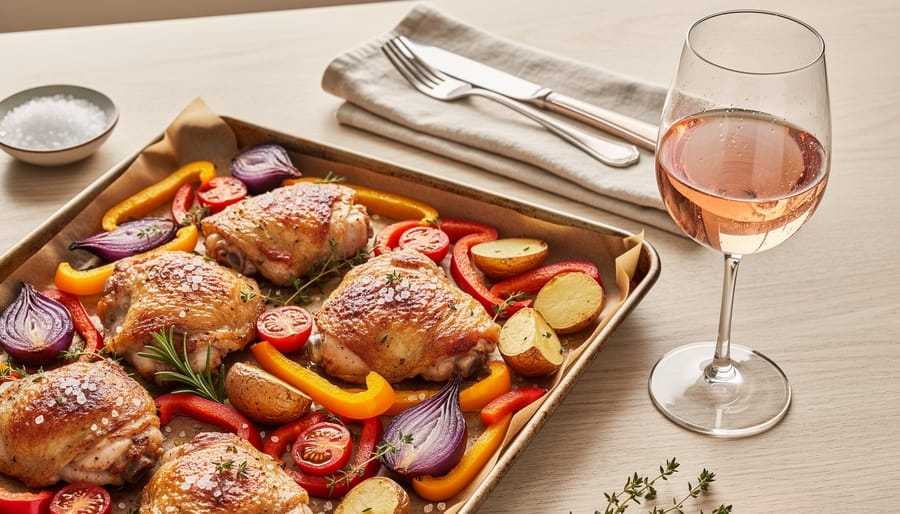
Sheet pan chicken thighs deliver maximum flavor with minimal effort, exactly what you need after a long day. Toss bone-in, skin-on thighs with cherry tomatoes, bell peppers, and red onion, season generously with herbs de Provence, salt, and pepper, then roast at 425°F for 25 minutes. The skin crisps beautifully while the vegetables caramelize in the rendered chicken fat.
Dry Provençal-style rosé transforms this simple supper into something special. The wine’s refreshing acidity cuts through the chicken’s richness while its delicate red fruit notes echo the sweetness of roasted vegetables. Unlike heavier reds that might overpower the dish or whites that can seem too light, rosé hits the perfect middle ground.
Look for rosés from Provence or similar styles from California and Spain. These wines typically show strawberry and melon flavors with a bone-dry finish and subtle herbal undertones that mirror the herbs coating your chicken. Serve well-chilled, around 50°F, which provides a pleasant contrast to the hot sheet pan meal.
The beauty of this pairing lies in its adaptability. Swap vegetables based on what’s in your crisper, zucchini, asparagus, or small potatoes all work brilliantly. The rosé remains versatile enough to complement any combination. Jane recommends keeping a bottle of quality Provençal rosé in your fridge year-round, not just for summer. Its food-friendly nature makes it ideal for weeknight cooking when you want something more interesting than water but don’t want to overthink your choice.
This pairing proves that rosé deserves respect beyond poolside sipping. It’s a serious wine for satisfying, no-fuss dinners.
4. Pasta Carbonara with Vermentino
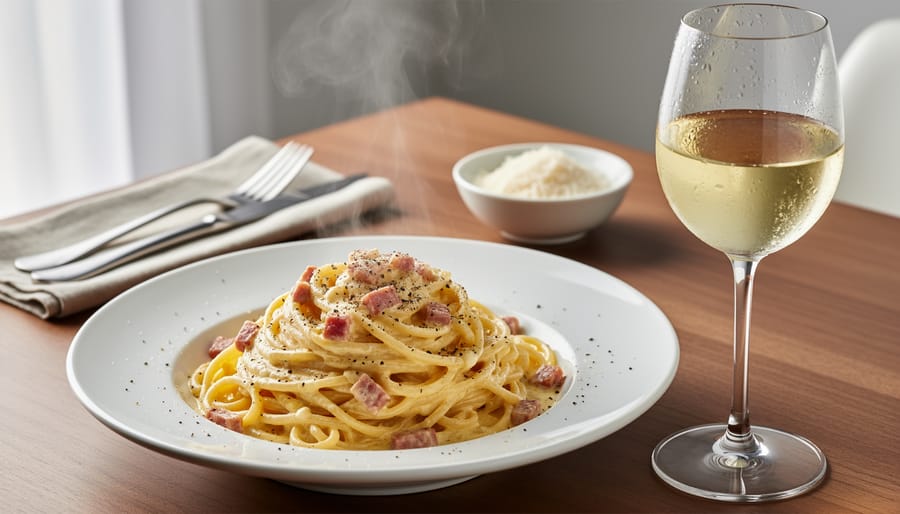
Authentic carbonara delivers pure comfort in just 15 minutes, spaghetti tossed with crispy guanciale or bacon, egg yolks, Pecorino Romano, and black pepper. No cream needed. The silky sauce clings to each strand, creating richness that might seem challenging for wine pairing, but that’s precisely where Vermentino shines.
This Italian white from Sardinia or coastal Liguria brings bright citrus notes, think lemon zest and green apple, alongside a distinct mineral quality that seafood lovers often recognize. Those characteristics cut through carbonara’s richness without fighting it. The wine’s crisp acidity refreshes your palate between bites, preventing the dish from feeling heavy, while its medium body stands up to the bacon’s savory punch and cheese’s saltiness.
Jane Calona emphasizes avoiding oaked Chardonnay here. “Oak adds butter and vanilla flavors that compete with carbonara’s already creamy texture,” she explains. “You end up with too much richness and no contrast. Vermentino’s clean profile provides the lift this dish desperately needs.” The wine’s herbal undertones, sometimes described as Mediterranean scrubland, complement the black pepper’s bite beautifully.
Look for bottles labeled Vermentino di Sardegna or Pigato (Vermentino’s Ligurian name). They typically cost between $15 and $25, making them weeknight-friendly. Serve slightly chilled, around 50°F, to maximize the refreshing effect.
The pairing proves that matching wine to comfort food isn’t about elaborate rules. Unlike a bold Zinfandel pairing that embraces intensity, this combination succeeds through contrast and balance. The simplicity of both carbonara and Vermentino makes the match work every time, turning a quick Tuesday dinner into something that feels deliberately chosen rather than thrown together.
5. Beef Chili with Zinfandel
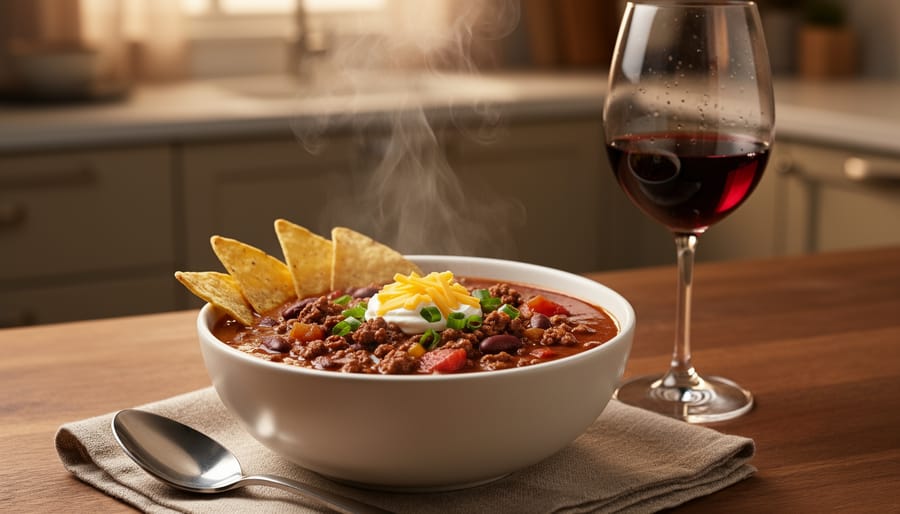
A well-made beef chili demands a wine that won’t back down, and Zinfandel rises to the challenge with its bold fruit and natural spice. This pairing transforms a 25-minute weeknight chili into something memorable without requiring hours of simmering.
The beauty of quick chili lies in strategic shortcuts. Brown ground beef with onions and garlic, add canned beans, crushed tomatoes, and your spice blend, then let it bubble for 15 minutes while flavors meld. The key is layering chili powder, cumin, and a touch of cocoa powder early so they bloom in the fat before liquids go in.
Zinfandel’s jammy blackberry and raspberry notes create a surprising harmony with chili’s savory depth. The wine’s characteristic pepper and clove undertones mirror the spice blend, while its moderate tannins stand up to the beef without fighting the tomato acidity. Look for California Zinfandels in the $15-25 range; their ripe fruit profile complements American-style chili better than a good Italian red which might taste too austere against the bold spices.
Jane recommends making a double batch on Sunday and refrigerating it. Chili actually improves overnight as flavors integrate, and reheating takes just minutes on a busy Tuesday. You can have dinner on the table faster than ordering takeout, with a glass of Zinfandel already poured.
The wine’s slight sweetness also tames jalapeño heat if you like your chili spicy, while its alcohol content carries aromatic spice compounds across your palate. Pour it at cool room temperature, around 60-65°F, to showcase both fruit and structure without emphasizing the alcohol.
6. Pan-Seared Salmon with Sauvignon Blanc
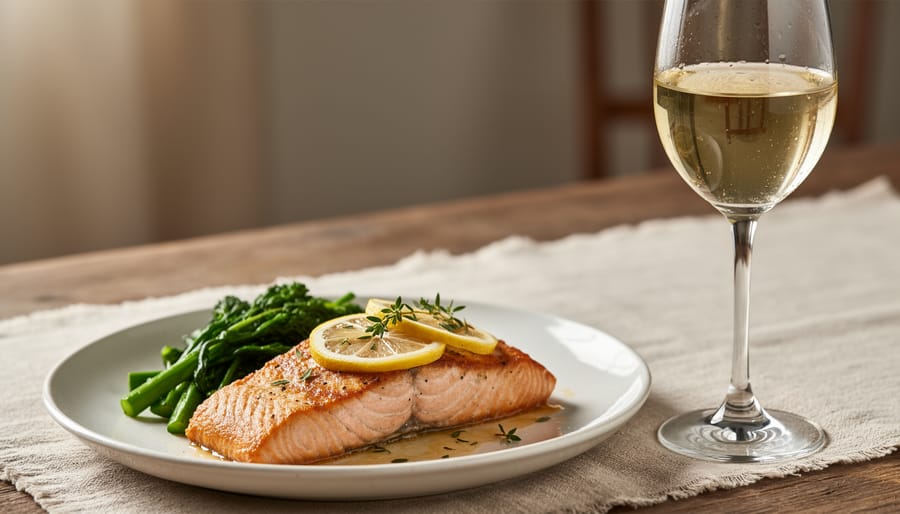
Pan-seared salmon might sound fancy, but it’s one of the fastest proteins you can cook, perfect for those evenings when you want something nutritious without the hassle. A good fillet needs just 3-4 minutes per side, and when you pair it with a crisp Sauvignon Blanc, you’ve got a weeknight meal that feels far more special than the 12 minutes it takes to prepare.
The magic here is in the wine’s personality. Sauvignon Blanc brings bright acidity and herbaceous notes, think fresh-cut grass, citrus zest, and sometimes a hint of green bell pepper, that mirror the lemon and herbs you’d naturally reach for when cooking salmon. This isn’t about masking the fish; it’s about amplifying its clean, delicate flavor. The wine’s zingy character cuts through the salmon’s natural oils while its crispness refreshes your palate between bites.
I prefer New Zealand Sauvignon Blanc for this pairing. The Marlborough region produces wines with vibrant grapefruit and lime notes that sing alongside salmon. If you want something slightly softer, try a Loire Valley Sancerre, it offers more minerality and restraint, which works beautifully if you’re keeping the seasoning simple.
Temperature matters more than most people realize. Serve your Sauvignon Blanc well-chilled (around 45-50°F), and let your salmon rest for a minute after cooking so it’s warm but not scorching hot. This temperature contrast creates a pleasant interplay on your palate.
Keep the preparation straightforward: salt, pepper, a squeeze of fresh lemon, and perhaps some dill or parsley. The simplicity lets both the fish and wine shine without competing for attention.
7. Margherita Pizza (Store-Bought Dough) with Chianti
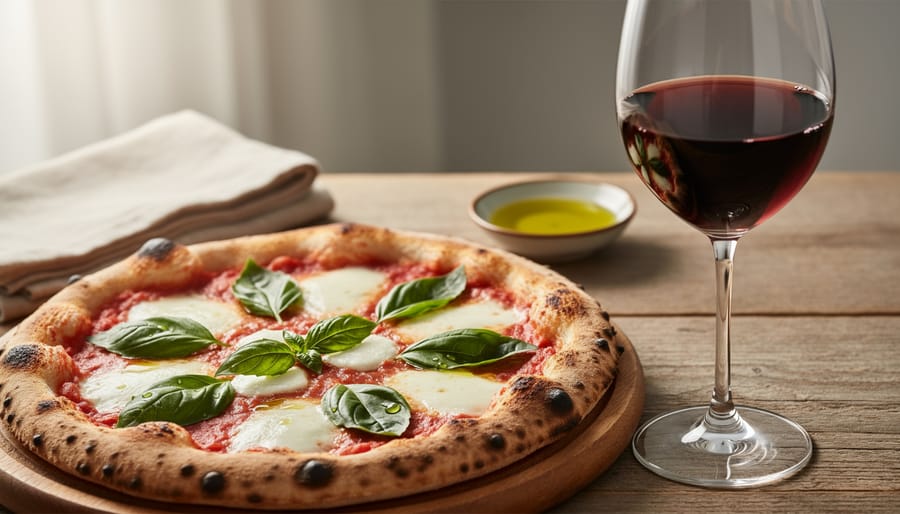
Nothing delivers weeknight satisfaction quite like homemade pizza, especially when you skip the dough-making marathon. Quality store-bought dough from your grocery’s refrigerated section cuts prep time dramatically, you’ll have pizza on the table in under 25 minutes.
The magic of a proper Margherita lies in restraint. Stretch your room-temperature dough into a rough circle (imperfect edges add charm), spread a thin layer of crushed San Marzano tomatoes, tear fresh mozzarella into chunks, and scatter torn basil leaves after baking. That’s it. Bake at your oven’s highest temperature, usually 500°F, for 10 to 12 minutes until the crust bubbles and chars in spots.
Chianti is the textbook pairing here, and for good reason. This Tuscan red brings bright cherry fruit and noticeable acidity that mirrors the tomato sauce’s natural tartness. The wine’s moderate tannins handle the cheese’s fat without overwhelming the delicate basil, while its earthy undertones echo the woodfired character you get from a scorching-hot oven.
You don’t need Chianti Classico Riserva for a Tuesday night pizza. Look for a straightforward Chianti in the $12 to $18 range, bottles labeled simply “Chianti” rather than the pricier Classico tier work beautifully. Serve it slightly cool, around 60°F, which keeps the fruit lively against the hot pizza.
One crucial dough tip: let it sit at room temperature for 30 minutes before stretching. Cold dough resists shaping and snaps back stubbornly. Warm dough relaxes, stretches easily, and bakes up with better texture. If you’re pressed for time, microwave a damp towel for 20 seconds and drape it over the dough ball while you prep toppings.
This pairing proves that classic Italian combinations became classics because they simply work.
Making Quick Comfort Pairings Work for You
Jane’s philosophy on wine pairing is refreshingly simple: the best match is the one that makes your Tuesday night feel special. These seven combinations prove that quick comfort meals deserve thoughtful wine choices, not leftover bottles from last weekend’s gathering.
Start with the combinations that sound most appealing, then experiment from there. If you love the Carbonara with Vermentino pairing but only have Sauvignon Blanc in your fridge, pour it anyway. The rigid rules matter less than discovering what brings you joy after a long day.
Keep a rotating selection of weeknight wines within easy reach. Stock an unoaked white, a light red, and a dry rosé, the three workhorses that handle most quick comfort scenarios. When a bottle enhances your 20-minute meal rather than sitting unopened because it feels too precious for a weeknight, you’ve found the sweet spot between convenience and sophistication. The ritual of pairing transforms routine dinners into small celebrations worth savoring.
What to Watch For
The most common mistake is opening a bottle that’s too cold or too warm. White wines like Vermentino and Sauvignon Blanc should come out of the fridge about 10 minutes before serving, overly chilled wines hide their best flavors. Meanwhile, lighter reds such as Pinot Noir benefit from a slight chill (about 60°F), while bigger wines like Zinfandel and Chianti taste best just below room temperature.
Pay attention to portion sizes when pairing. A heavy hand with rich comfort foods can overwhelm even the boldest wine. The opposite holds true as well, if your mac and cheese is particularly decadent, that crisp Chardonnay needs enough body to stand up to it. Taste as you cook and adjust your wine choice if needed. Finally, don’t stress about “rules.” If your Zinfandel works beautifully with your salmon instead of the suggested Sauvignon Blanc, trust your palate. The goal is enjoyment, not perfection.
Common Questions About Comfort Food Wine Pairings
Pairing wine with comfort food shouldn’t feel complicated. Here are answers to the questions Jane hears most often from readers tackling weeknight pairings.
Do I need expensive wines for comfort food pairings?
Absolutely not. Comfort food calls for approachable wines in the $12-20 range that won’t overpower simple flavors. A $15 Chianti works beautifully with homemade pizza, and you’ll find excellent Sauvignon Blanc and rosé at similar price points.
Can I use leftover wine for cooking these dishes?
Yes, provided it’s still drinkable. Wine that’s been open for three to four days works fine for deglazing pans or adding to tomato soup, though Jane recommends saving your fresher bottles for sipping alongside the meal where you’ll actually taste the wine’s character.
What if I prefer red wine with fish?
Go for it. Light-bodied reds like Pinot Noir pair nicely with richer fish preparations, especially salmon. The “white with fish” guideline is just that, a guideline, not a rule.
How should I store opened wine for weeknight use?
Recork or cap the bottle and refrigerate it, even reds. This slows oxidation and keeps the wine fresh for three to five days, perfect for weeknight pairing experiments without opening a new bottle each night.
For budget-conscious pairing, Jane recommends keeping a rotation of versatile bottles on hand. A dry rosé works across multiple comfort foods, from roasted chicken to grilled cheese. Unoaked Chardonnay and Sauvignon Blanc cover most quick seafood and creamy pasta needs, while a food-friendly Pinot Noir handles everything from tomato-based dishes to lighter meats. You don’t need a different bottle for every meal, three or four reliable styles will cover your weeknight comfort food repertoire without breaking the bank or cluttering your counter.