 judy
judyZinfandel’s bold, fruit-forward character pairs beautifully with aged, hard cheeses like aged Gouda and sharp cheddar, creamy blue cheeses that balance its jammy sweetness, and rich, washed-rind varieties that stand up to its high alcohol content. The key is matching the wine’s intensity with cheeses that won’t be overwhelmed by its robust personality.
Wine educator Jane Calona emphasizes that pairing Zinfandel presents a unique challenge most wine lovers don’t anticipate. “Unlike more subtle wines, Zinfandel’s high alcohol and concentrated fruit demand cheeses with enough fat and flavor complexity to create harmony rather than competition,” she explains. That 15-16% alcohol level can make delicate cheeses taste thin or bitter, while the wine’s signature blackberry and pepper notes need complementary flavors to shine.
The good news? Once you understand Zinfandel’s bold profile, choosing the right cheese becomes intuitive. You’re looking for varieties with substantial texture, pronounced flavor, and enough richness to soften the wine’s edges. Unlike some classic cheese and wine combinations that rely on contrast, Zinfandel pairings work best when both elements bring equal intensity to the table.
Whether you’re planning a casual tasting for friends or preparing a sophisticated cheese board for your next dinner party, these eight pairings deliver every time. Each recommendation includes specific flavor notes to look for and practical serving tips that take the guesswork out of your selection.
What Makes Zinfandel Different for Cheese Pairing
Zinfandel throws you a curveball right from the first sip. That burst of jammy blackberry, the warmth of 15% alcohol, those peppery spice notes, this isn’t your polite Bordeaux or structured Burgundy. It’s a fruit-forward powerhouse that can easily overwhelm delicate cheeses or clash with the wrong textures.
The high alcohol content is the first challenge. It creates a warming sensation that can make mild, creamy cheeses taste watery or bland. You need cheeses with enough fat and flavor intensity to stand their ground. The fruit-forward character presents the second puzzle: all that ripe berry and sometimes jammy sweetness needs either complementary sweetness in the cheese or enough savory punch to create contrast without discord.
Then there’s the spice element, black pepper, clove, sometimes a hint of smoke from oak aging. This spiciness opens up pairing possibilities that wouldn’t work with fruit-driven Pinot Noir or tannic Cabernet. Cheeses with their own complexity, nuttiness, or even smoky notes can create fascinating bridges.
The moderate tannin structure matters too. Zinfandel isn’t as tannic as Cabernet Sauvignon, so you don’t need high-fat cheeses purely for tannin management. Instead, you’re matching intensity and finding flavors that either echo or balance that exuberant fruit and spice profile. The eight pairings ahead all meet these criteria in different ways.
1. Aged Gouda, The Caramel Connection
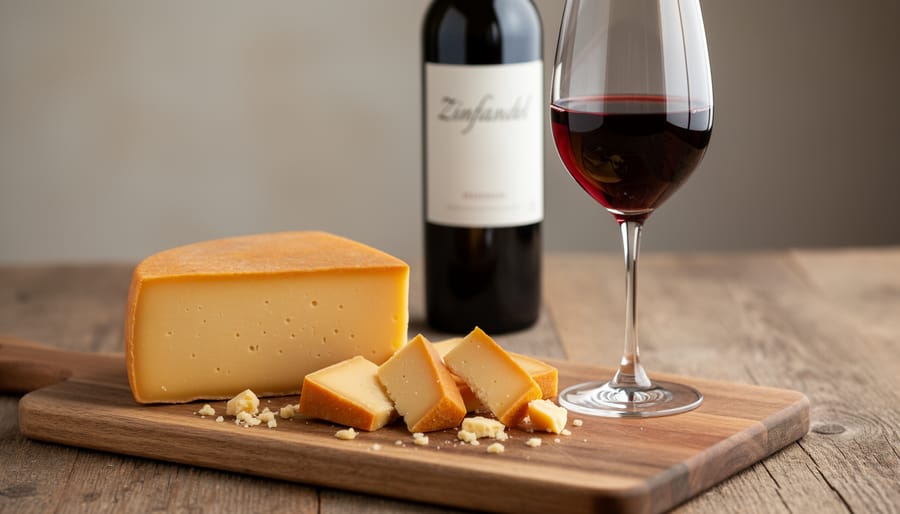
Aged gouda transforms as it matures, developing deep caramel and butterscotch flavors that create an almost magical connection with zinfandel’s jammy fruit character. When you bite into a well-aged gouda (think 18 months or older), those sweet, toffee-like notes mirror the ripe berry and plum flavors in your glass, creating harmony instead of competition.
The texture matters just as much as the flavor. Aged gouda develops those satisfying protein crystals that crunch slightly between your teeth, and this firm, dense texture stands up beautifully to zinfandel’s full body and higher alcohol content. A softer, younger gouda simply gets overwhelmed.
For serving, let both the cheese and wine come to room temperature. Cut the gouda into thin wedges rather than cubes to maximize the surface area on your palate. The cheese’s natural sweetness helps tame zinfandel’s sometimes assertive tannins, while the wine’s fruit-forward profile keeps the gouda from tasting too sharp or salty.
This pairing works particularly well with California zinfandels that show darker fruit notes. Look for goudas aged between 18 and 36 months for the best balance. Anything younger lacks the caramel depth, while extremely aged varieties can turn too crystalline and sharp for this match.
2. Sharp Cheddar, Bold Meets Bold
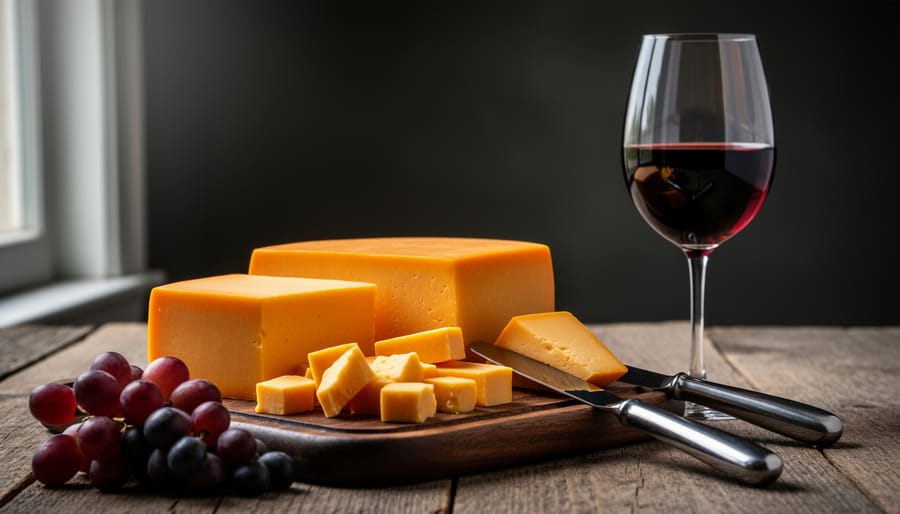
Sharp cheddar isn’t trying to play nice with zinfandel, it matches the wine’s intensity punch for punch. When you’re dealing with a fruit-bomb zin that tastes like blackberry jam got into a fight with black pepper, you need a cheese with backbone. Sharp cheddar brings exactly that.
The magic here is in the contrast. Zinfandel’s jammy sweetness slams into cheddar’s sharp, tangy bite, and instead of canceling each other out, they create balance. The wine’s fruit mellows the cheese’s acidity, while the cheddar cuts through zin’s alcohol heat. Jane recommends working with cheddars aged 18 to 24 months for this pairing. Go younger and the cheese gets lost; push past 36 months and you’re fighting the wine instead of complementing it.
This pairing particularly shines with California zinfandels that lean into their ripe, almost overripe fruit character. Those 15.5% alcohol monsters that some wine snobs turn their noses up at? They’re practically begging for a wedge of extra-sharp cheddar. The cheese’s crystalline texture, those little crunchy bits that develop during aging, adds a satisfying element that plays beautifully against zin’s velvety mouthfeel.
Serve the cheddar at room temperature, cut into thick slabs rather than cubes, so you get the full textural experience.
3. Manchego, Spanish Soul Match
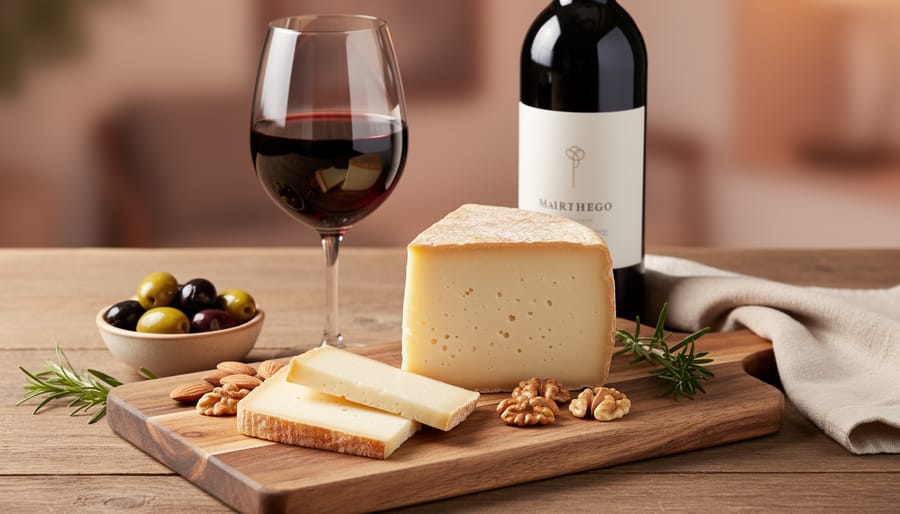
Manchego brings a nutty, buttery richness that creates an unexpected harmony with zinfandel’s bold fruit. The Spanish sheep’s milk cheese has a firm, compact texture that doesn’t get overwhelmed by the wine’s high alcohol content, instead, it stands up beautifully while the flavors meld.
The key is choosing the right age. Young manchego (fresco, aged 2 weeks to 3 months) is too mild and gets lost. Look for semicurado (3-6 months) or curado (6-12 months) versions. These develop the nutty, caramel-like notes that echo zinfandel’s jammy character. The cheese’s slight granular texture also provides a pleasant contrast to the wine’s smooth mouthfeel.
I’ve found that manchego’s buttery finish actually tames zinfandel’s sometimes aggressive alcohol heat. The fat content coats your palate, making the wine taste rounder and more elegant. This pairing works particularly well with primitivo-style zinfandels that have earthy undertones alongside the fruit.
Serve manchego at room temperature, cut into thin wedges or small cubes. Pair it with marcona almonds and quince paste for a complete Spanish-inspired cheese board that makes your zinfandel shine.
4. Smoked Mozzarella, The Surprise Winner
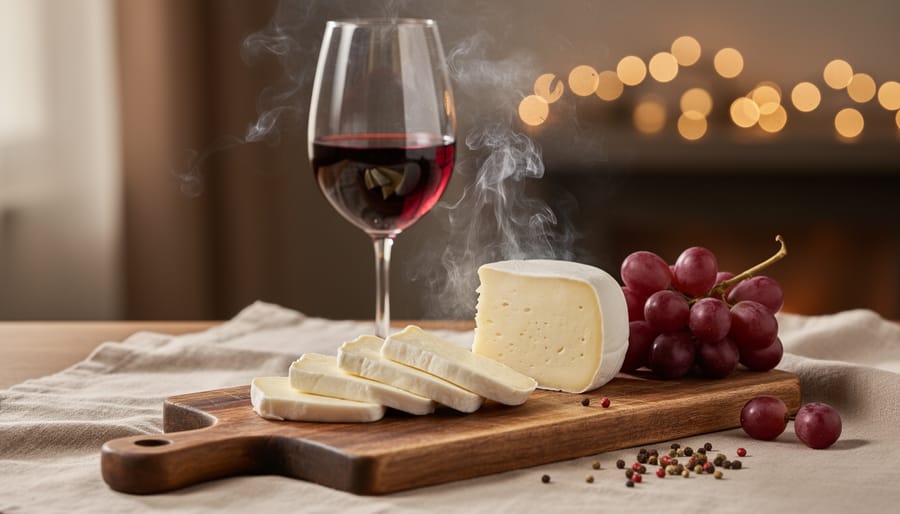
Smoked mozzarella catches most wine pairing guides off-guard, but it’s exactly what zinfandel needs. The smoking process transforms mild, milky mozzarella into something with backbone, enough char and depth to mirror the toasty oak and peppery spice notes you’ll find in most California zins. While fresh mozzarella drowns under zinfandel’s fruit intensity, the smoke creates a bridge between the wine’s berry jam and its savory undertones.
The texture shift matters too. Smoked mozzarella firms up during the smoking process, developing a slight chewiness that stands up to zinfandel’s tannins instead of collapsing into a creamy puddle. That resistance on the palate gives each bite structure, letting the wine’s spice notes amplify the cheese’s campfire character rather than overwhelming it.
I love serving smoked mozzarella in thick slices alongside grilled vegetables or cured meats. The smokiness plays beautifully with zinfandel’s barbecue-friendly personality. For a simple but impressive pairing, drape thin slices over warm sourdough with a drizzle of olive oil and cracked black pepper. The warmth releases the cheese’s smoky oils, and zinfandel’s ripe fruit cuts through the richness while echoing those charred, spicy notes. It’s casual enough for a weeknight but sophisticated enough for guests who think they know all the cheese pairings.
5. Gruyère, The Alpine Answer
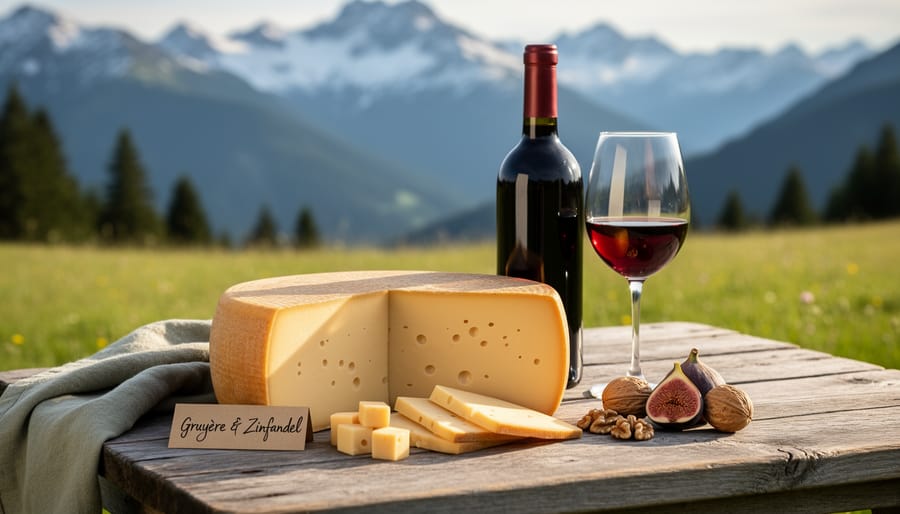
Gruyère brings a sophisticated nuttiness that mirrors zinfandel’s savory undertones while standing up to its fruit-forward power. The Swiss cheese’s complex flavor profile, earthy, slightly sweet, with hints of hazelnut, creates fascinating interplay with zinfandel’s layered character of dark fruit, pepper, and spice.
Temperature matters significantly here. Serve gruyère at room temperature to unlock its full aromatic potential. Cold cheese mutes the nutty notes that make this pairing work, leaving you with a one-dimensional experience that gets steamrolled by the wine’s intensity.
Age is your ally with this pairing. Young gruyère, while pleasant, lacks the depth to complement a bold zinfandel. Look for wheels aged at least 12 months, preferably 18 to 24 months. These older versions develop the crystalline texture and concentrated flavor that can genuinely hold their own against a fruit-bomb zin.
One crucial warning: skip the smoked gruyère. The smoke overwhelms the delicate interplay between the cheese’s nuttiness and the wine’s spice notes, creating a muddled palate experience. Stick with traditional cave-aged gruyère, and let the natural complexities of both wine and cheese shine through. The pairing works beautifully on its own or alongside walnuts and honey for a more elaborate presentation.
6. Pecorino Romano, Salty and Savory
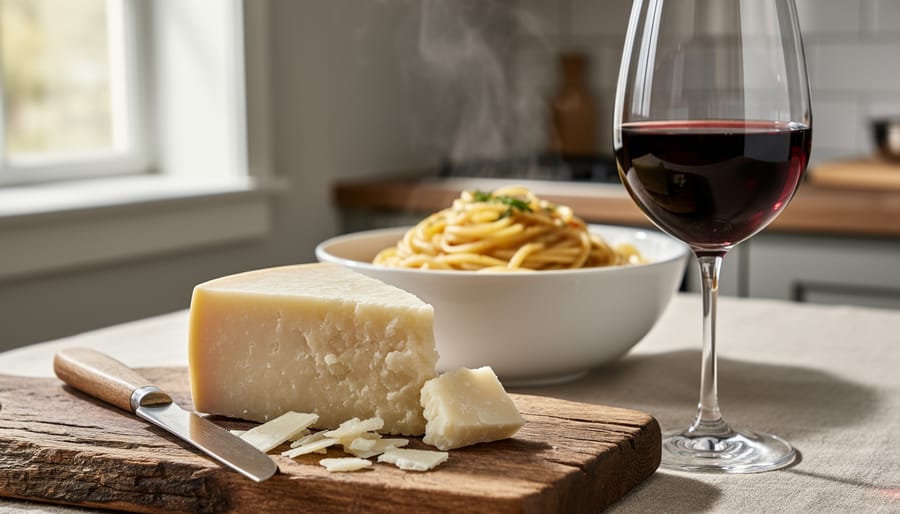
Pecorino Romano brings something most cheeses can’t: serious salt. That sharp, almost briny edge cuts through zinfandel’s fruit sweetness like nothing else, creating a balance that keeps each sip and bite interesting instead of overwhelming.
The intensity match here is crucial. Pecorino Romano isn’t a subtle cheese, and zinfandel isn’t a subtle wine. Where milder cheeses get bulldozed by zinfandel’s 15% alcohol and jammy fruit, pecorino stands firm. The salt actually tames the wine’s heat, making high-alcohol zins taste smoother than they would on their own.
This pairing really shines with pasta dishes. Jane recommends serving aged pecorino romano (at least 12 months) grated over a simple cacio e pepe or alongside grilled vegetables. The combination of the cheese’s salt, the dish’s pepper, and zinfandel’s spice creates layers that work together rather than competing.
Skip the pre-grated supermarket stuff. Fresh-cut pecorino romano has a sharper bite and better texture. Serve it at room temperature in small chunks, not paper-thin slices. The goal is to taste the salt burst, then follow it with the wine. That sequence matters more than you’d think.
7. Parmigiano-Reggiano, The Umami Play
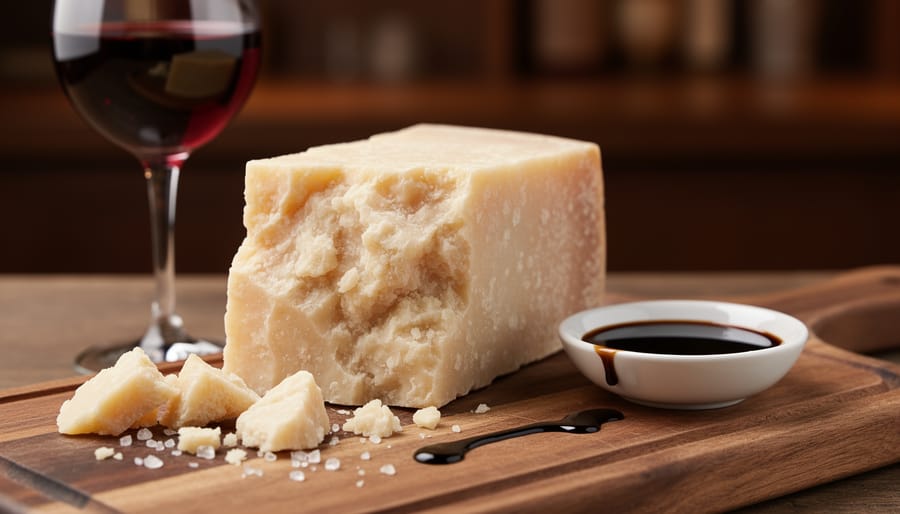
Parmigiano-Reggiano transforms a zinfandel tasting into something unexpectedly sophisticated. Those tiny white crystals you crunch when biting into a well-aged wedge? They’re concentrated amino acids that create an umami depth perfectly matched to zinfandel’s layered complexity.
The key is age. Look for Parmigiano aged at least 24 months, though 36-month versions hit the sweet spot for most zinfandels. Younger versions lack the crystalline texture and concentrated savory notes that make this pairing work. The cheese’s granular bite cuts through zinfandel’s fruit while its nutty, almost meaty undertones complement rather than compete with the wine’s spice and oak.
Here’s where it gets interesting: drizzle aged balsamic vinegar over your Parmigiano before serving with zinfandel. The vinegar’s sweetness bridges the wine’s jammy fruit, while its acidity refreshes your palate between sips. Jane uses 12-year balsamic for this, applied sparingly with a teaspoon rather than poured.
Serve Parmigiano in irregular chunks rather than thin slices. Breaking it releases more of those flavor crystals, and the rustic presentation matches zinfandel’s bold personality. Room temperature is non-negotiable. Cold Parmigiano tastes one-dimensional and won’t stand up to the wine’s warmth.
8. Blue Cheese, For the Adventurous
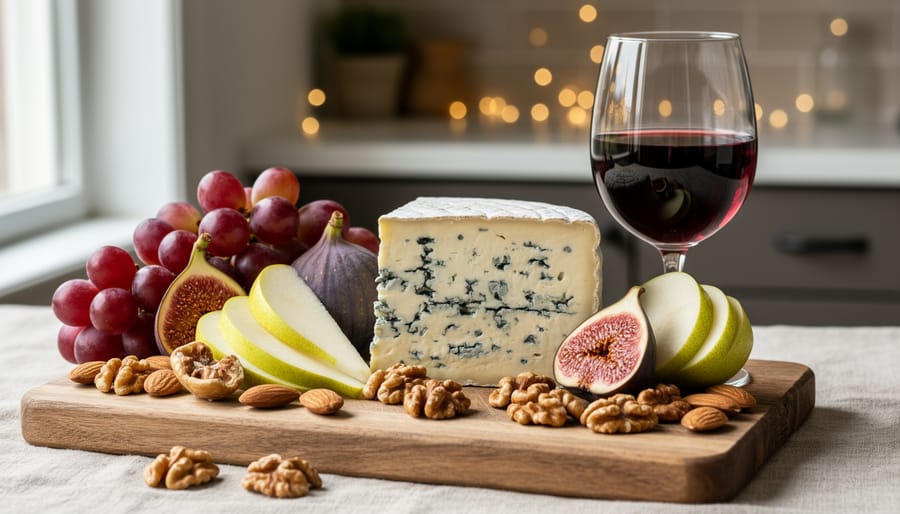
Blue cheese sits at the adventurous end of the zinfandel pairing spectrum, but get it right and you’ll discover something remarkable. The key is choosing milder, creamier blues rather than aggressive, pungent varieties.
Gorgonzola dolce works beautifully. Its sweet cream base and gentle blue veining won’t fight zinfandel’s fruit-forward character. The cheese’s subtle funkiness actually plays off the wine’s spice notes, creating an unexpected harmony that impresses guests every time.
Cambozola, that triple-cream hybrid, also shines here. The buttery richness softens zinfandel’s alcohol heat while the mild blue streaks add just enough tang to keep things interesting.
Avoid intensely sharp blues like aged Roquefort or Stilton. Their aggressive mineral notes clash with zinfandel’s jammy sweetness, creating a metallic finish nobody enjoys. Danish blue and other salty, crumbly varieties also tend to overwhelm rather than complement.
Jane’s personal favorite? Saint Agur, a French blue with a creamy, almost mousse-like texture. “It’s bold enough to stand up to zinfandel without starting a fight,” she notes. Serve it slightly warmer than fridge temperature to let those complex flavors develop. If you’re building a complete pairing chart position blue cheese as your wild card option for adventurous tasters.
Pairing Tips from Jane’s Tasting Room
After years of hosting tastings, I’ve learned that successful zinfandel cheese pairings come down to a few practical considerations most people overlook. Temperature matters more than you’d think: bring your zinfandel to 60-65°F (slightly cool, not room temperature) and let hard cheeses sit out for 30 minutes before serving. The cooler wine tames the alcohol burn, while room-temperature cheese releases its full flavor.
- Serve zinfandel slightly chilled (60-65°F) to balance its high alcohol
- Allow hard cheeses 30 minutes at room temperature before tasting
- Start with milder pairings (gouda, manchego) and progress to bolder ones (blue, pecorino)
- Include dried fruits, marcona almonds, and honeycomb to bridge flavors
Portion sizes trip up beginners constantly. You need less cheese than you think, one to two ounces per person per variety is plenty. Zinfandel’s bold fruit dominates delicate cheeses, so the biggest mistake I see is including soft, mild options like brie or fresh chèvre on a zin-focused board. They vanish against the wine.
When building your board, arrange cheeses from mild to intense, moving clockwise. This isn’t just aesthetics, it’s how your palate should progress through the tasting. These principles align with traditional wine and food pairings: match intensity, consider texture, and use salt or fat to balance fruit. Zinfandel demands cheeses with backbone, anything timid gets steamrolled.
Common Questions About Zinfandel and Cheese
Does white zinfandel pair with the same cheeses?
No. White zinfandel’s sweetness and lighter body call for completely different pairings like fresh mozzarella or mild feta. The bold, aged cheeses that work with red zinfandel will overwhelm white zin’s delicate profile.
What cheeses should I avoid with zinfandel?
Skip delicate, fresh cheeses like chèvre or brie. Zinfandel’s power will steamroll their subtle flavors. Also avoid extremely pungent washed-rind cheeses, which can clash with zinfandel’s fruit-forward character.
How do I handle very high-alcohol zinfandels (15%+) with cheese?
Lean toward saltier, harder cheeses like pecorino romano or aged parmesan. The salt and crystalline texture help cut through the alcohol heat, preventing that burning sensation some people get with big zins.
Can I pair zinfandel with cheese on a charcuterie board?
Absolutely. Zinfandel actually shines with cured meats alongside cheese. Pair it with prosciutto, salami, and your choice of aged cheeses for a complete tasting experience that rivals what you’d find in an Italian red guide pairing scenario.
These questions come up constantly at tastings. The white zinfandel confusion is especially common since people assume the grape variety means identical pairings. Temperature matters too: serve both your zinfandel and aged cheeses at room temperature rather than fridge-cold for the best flavor expression.
The secret to pairing cheese with zinfandel isn’t mystery or luck, it’s choosing cheeses with enough backbone to match the wine’s intensity. Throughout our tastings, one pattern emerged clearly: aged, bold, or salty cheeses consistently outperform mild, fresh options. Whether you reach for the caramel notes of aged gouda, the crystalline bite of Parmigiano-Reggiano, or the unexpected smoke of mozzarella, you’re working with the same principle: complementing power with power.
Start with one or two of these pairings at your next wine night. Notice how the cheese changes as you sip, how flavors build and evolve. You might discover that sharp cheddar works better with your favorite fruit-forward zin than the manchego does. That’s the beauty of wine pairing, it’s personal, and there’s no single right answer.
These eight options give you a reliable starting point, but your palate is the final authority. Trust it, experiment freely, and enjoy the discovery process.