 judy
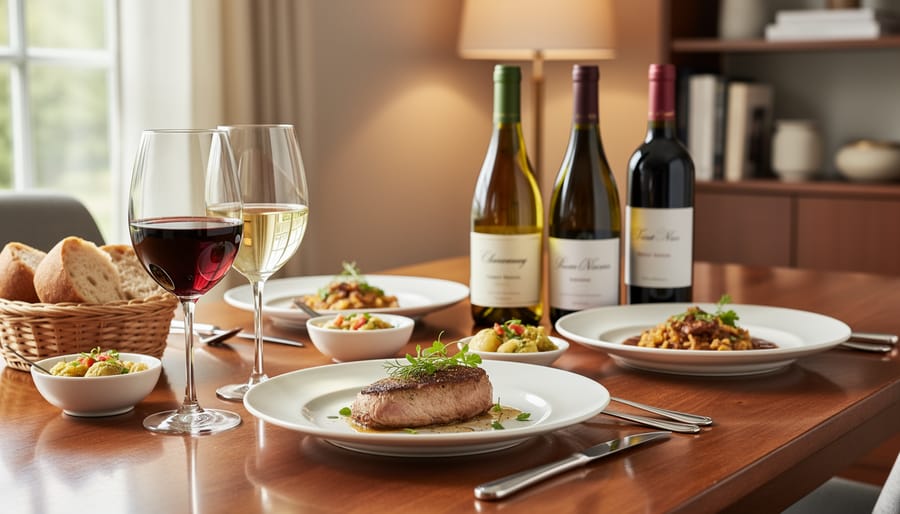
judyMatch your Cabernet Sauvignon with a perfectly marbled ribeye, not because tradition dictates it, but because the wine’s tannins literally bind to the meat’s proteins and fats, cleansing your palate between bites. Pair Sauvignon Blanc with goat cheese or oysters because the wine’s high acidity cuts through richness and amplifies briny flavors. Choose Pinot Noir for salmon or mushroom dishes since its medium body and earthy notes complement rather than overpower delicate proteins.
The most useful pairing charts focus on matching weight with weight and intensity with intensity. A light-bodied wine needs lighter fare, while bold wines demand robust flavors. You don’t need formal training to master this. Many enthusiasts who learn from home develop better instincts than those who memorize rigid rules.
Think of acidity as your reset button. High-acid wines like Riesling or Champagne work with fatty, fried, or creamy dishes because they refresh your mouth. Sweetness in wine needs equal or greater sweetness in food, or it tastes flat. Tannins crave protein and fat, which is why that Malbec feels harsh with fish but magical with grilled steak.
The chart below gives you immediate answers, but understanding why these pairings work transforms you from someone following instructions to someone creating experiences. That’s the difference between checking a box and genuinely enjoying what’s in your glass.
Why Wine and Food Pairing Charts Matter (More Than You Think)
You’re midway through dinner prep, bottle of wine in one hand and phone in the other, frantically googling “what wine goes with chicken?” only to find fifteen contradictory answers. Sound familiar? This is exactly why a solid pairing chart matters, it cuts through the noise when you need an answer now, not after scrolling through someone’s entire vacation story about Tuscany.
Here’s what most people don’t realize: wine and food pairing isn’t just about following arbitrary rules that some sommelier decreed in 1847. It’s chemistry. When you pair a fatty ribeye with a tannic Cabernet, those tannin-protein interactions literally change how both taste, the tannins soften, the meat seems less heavy, and suddenly you understand why steakhouses stock so much red wine. A chart gives you this knowledge in glanceable form, without requiring a degree in flavor science.
But here’s where it gets interesting: a good pairing chart isn’t meant to be a permanent crutch. Think of it like training wheels on a bike, something you reference until your palate develops its own instincts. After using a chart a dozen times, you start noticing patterns. You realize that sparkling wine’s acidity cuts through fried foods the same way it works with oysters. You begin matching weight with weight instinctively, delicate fish with lighter wines, rich stews with bolder bottles.
Unlike formal wine classes that teach theory before practice, a chart lets you learn by doing. You make a pairing, taste it, adjust next time. No homework, no intimidation, just gradual confidence building. The chart’s there when your intuition fails, quietly teaching you why certain combinations sing while others fall flat.
That practical reference in your kitchen drawer? It’s actually your shortcut to becoming the kind of person who can improvise pairings without second-guessing every pour.
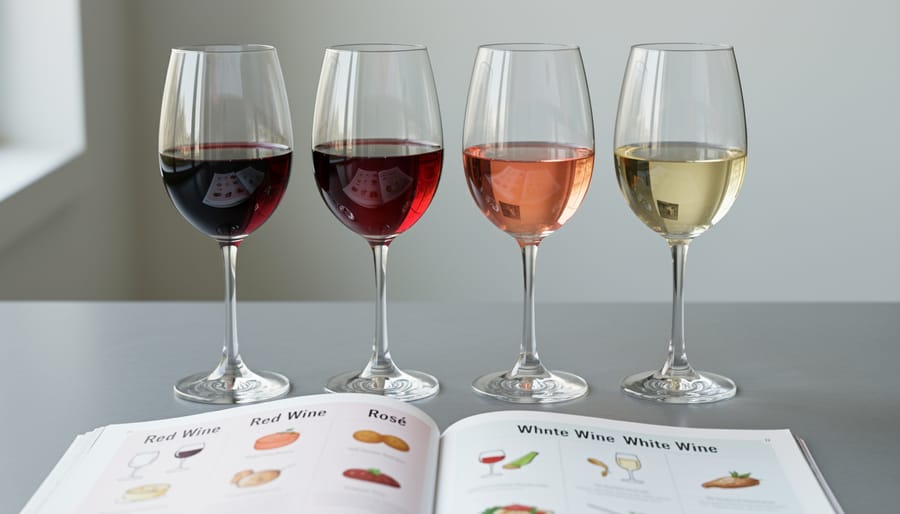
The Essential Wine and Food Pairing Chart
Red Wine Pairings
Light-bodied reds like Pinot Noir bring delicate fruit flavors and low tannins, making them perfect partners for salmon, roasted chicken, mushroom dishes, and duck. Their subtle structure won’t overpower these foods, while their bright acidity cuts through any richness. Gamay and lighter styles of Grenache work similarly, complementing rather than competing with your meal.
Medium-bodied reds occupy the sweet spot of versatility. Merlot, with its soft tannins and plum flavors, pairs beautifully with roasted turkey, pork tenderloin, pasta with tomato sauce, and grilled vegetables. Chianti and other Sangiovese-based wines love anything with tomatoes, think pizza, lasagna, or pasta Bolognese. The wine’s acidity mirrors the tomato’s brightness while standing up to herbs and cheese. Malbec’s juicy fruit character makes it a natural match for burgers, barbecue ribs, and Argentine-style grilled meats.
Full-bodied reds demand heartier fare. Cabernet Sauvignon’s bold tannins and dark fruit notes need the fat and protein in ribeye steak, lamb chops, or aged cheddar to soften their grip. Syrah handles spicy sausages, venison, and smoky barbecue with ease. These powerful wines can overwhelm lighter dishes, but paired with substantial proteins and rich sauces, they transform a simple dinner into something memorable. The key is matching their intensity, the heavier the wine, the richer your food should be.
White Wine Pairings
White wines offer extraordinary versatility across the dinner table, from delicate seafood appetizers to creamy pasta mains. The key is matching the wine’s body and acidity level to your dish’s weight and richness.
**Light-Bodied Whites (Sauvignon Blanc, Pinot Grigio, Albariño)**
These crisp, refreshing wines shine brightest with lighter fare. Their bright acidity cuts through fat while complementing delicate flavors beautifully. Reach for them with fresh oysters, grilled white fish, goat cheese salads, or simple vegetable dishes. Sauvignon Blanc’s herbaceous notes make it exceptional with dishes featuring lemon, herbs, or green vegetables. Pinot Grigio’s clean minerality pairs wonderfully with sushi and raw preparations.
**Medium-Bodied Whites (Unoaked Chardonnay, Viognier, Chenin Blanc)**
These wines bridge the gap between light and rich, working with chicken, pork tenderloin, seafood in butter sauces, and pasta primavera. They have enough body to stand up to moderately rich dishes without overwhelming subtle flavors.
**Full-Bodied Whites (Oaked Chardonnay, White Burgundy)**
Rich, buttery Chardonnays handle heavier preparations that would crush lighter whites. They’re your choice for lobster with drawn butter, creamy risotto, roasted chicken with pan sauce, or grilled salmon. The oak aging adds vanilla and toast notes that complement caramelization from roasting or grilling. These wines need substantial dishes to avoid tasting flabby or overpowering.
Rosé, Sparkling, and Dessert Wines
These versatile wine categories deserve more attention than they typically receive. Rosé works beautifully with a wider range of foods than most people realize, think grilled vegetables, salmon, charcuterie boards, and Mediterranean dishes. Its balanced acidity and fruit-forward profile bridge the gap between red and white wine pairings.
Sparkling wines like Champagne and Prosecco are pairing powerhouses. The bubbles and acidity cut through rich, fatty foods remarkably well. Try them with fried chicken, oysters, soft cheeses, or even potato chips. Champagne’s complexity complements everything from sushi to scrambled eggs.
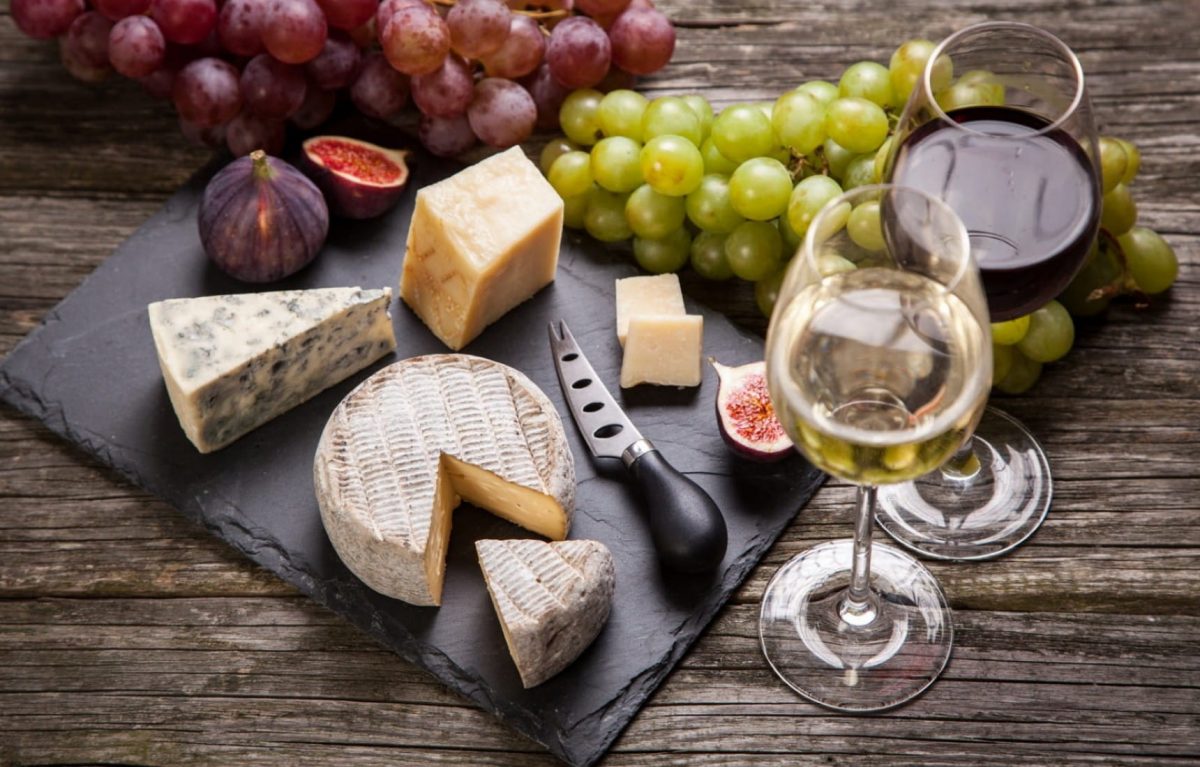
Dessert wines present their own opportunities. Port pairs magnificently with blue cheese and dark chocolate. Late-harvest Riesling matches fruit tarts and crème brûlée. Sweet wines can also balance spicy cuisine, a Moscato d’Asti alongside Thai curry creates an unexpectedly harmonious contrast.
The key principle? Match sweetness levels. Your wine should be slightly sweeter than your dessert, or the wine tastes flat. These categories prove that pairing flexibility extends far beyond the red-or-white decision.
Understanding the Six Key Pairing Principles
Understanding wine and food pairing becomes much simpler when you grasp the six core principles that drive successful matches. Think of these as your foundation, once you understand how and why they work, you can apply them to any pairing situation, even without a chart in front of you.
- Complement: Match similar flavor intensities and characteristics to create harmony
- Contrast: Use opposing flavors to create balance and highlight complexity
- Weight Matching: Pair light wines with delicate foods and bold wines with robust dishes
- Acid Balance: Use wine’s acidity to cut through richness or mirror food’s brightness
- Tannin Interaction: Leverage tannins to soften protein-rich foods and vice versa
- Regional Harmony: Trust that foods and wines from the same region often pair naturally
Complement means bringing together flavors that share common ground. A buttery Chardonnay complements lobster swimming in clarified butter because both share that rich, creamy quality. The wine doesn’t fight the food, it echoes and amplifies those luxurious notes. Similarly, an earthy Pinot Noir works beautifully with mushroom risotto because both speak the same forest-floor language.
Contrast takes the opposite approach, using differences to create balance. A crisp, high-acid Riesling cuts through the fatty richness of pork belly, cleansing your palate between bites. The wine’s bright acidity contrasts with the food’s heaviness, preventing palate fatigue. Sweet wines paired with blue cheese work on contrast too, the sweetness tempers the cheese’s pungent saltiness.
Weight matching is perhaps the most intuitive principle. A delicate Dover sole would be overwhelmed by a bold Cabernet Sauvignon, just as a char-grilled ribeye would make a light Pinot Grigio taste like water. Match the heft of your wine to the intensity of your dish. Grilled lamb needs something substantial like Syrah, while steamed halibut calls for something more restrained like Chablis.
Acid balance explains why tomato-based pasta dishes pair so well with Chianti, the wine’s bright acidity mirrors the tomatoes’ natural acidity, creating seamless integration. High-acid wines also cut through cream sauces and fried foods, refreshing your palate and preventing richness from becoming cloying.
Tannin interaction is why red wines and red meat form such a classic pairing. The proteins and fats in steak literally bind with tannins, softening both the wine’s astringency and the meat’s texture. This chemical reaction creates a smoother, more enjoyable experience than either element alone.
Regional harmony relies on centuries of culinary evolution. Tuscan Sangiovese evolved alongside olive oil, tomatoes, and aged cheeses, they grew up together. Spanish Tempranillo naturally complements jamón ibérico and manchego because they share the same terroir. When in doubt, what grows together goes together.
When to Break the Rules (And How to Do It Successfully)
The most liberating truth about wine pairing? Your preferences matter more than any rule ever written.
Traditional pairing guidelines exist because they work most of the time for most people. But taste is deeply personal. If you genuinely enjoy Chardonnay with steak or red wine with salmon, you’re not wrong. You’ve simply discovered something that works for your palate, and that’s exactly what pairing should accomplish.
The key to successful rule-breaking is understanding why you’re deviating. Take the classic “never pair red wine with fish” rule. It crumbles when you consider salmon with Pinot Noir. The fish’s rich, oily texture and meaty quality can absolutely handle a light red, especially when prepared with earthy mushrooms or served grilled. The pairing works because you’re matching weight and complementing flavors, not blindly following protein categories.
Some modern pairings that raised eyebrows but have since gained acceptance include sparkling wine with fried chicken, Riesling with spicy Thai food, and rosé Champagne with sushi. These combinations succeed because they apply fundamental principles in unexpected ways.
Start your experiments with small adjustments rather than dramatic leaps. If you love Sauvignon Blanc with chicken but want to try something different, shift to a light-bodied red like Gamay instead of jumping straight to Cabernet. Pay attention to preparation methods and sauces, which often matter more than the main ingredient.
Trust your palate, take notes on what you discover, and remember that even professional sommeliers disagree about pairings. The worst that happens when you experiment? You learn something new about your preferences. The best? You uncover a combination that becomes your signature pairing.
Common Pairing Mistakes (And Easy Fixes)
Even experienced wine enthusiasts make avoidable pairing mistakes that can diminish both the food and the wine. Fortunately, most errors have straightforward fixes once you recognize what’s going wrong.
The most common missteps usually stem from ignoring one of the key principles we’ve covered, weight matching, tannin consideration, or acid balance. Here’s what typically goes sideways and how to correct it:
- Overpowering Delicate Dishes
- Pairing a bold, full-bodied wine with subtle foods like fish or light salads crushes their flavors entirely. Switch to lighter wines that complement rather than dominate, think Pinot Grigio with grilled sole instead of oaked Chardonnay.
- Clashing Tannins with the Wrong Proteins
- High-tannin reds like Cabernet Sauvignon turn unpleasantly bitter when paired with fatty fish or delicate chicken breast. The fix: match tannic wines with fatty red meats, or choose low-tannin reds like Pinot Noir for lighter proteins.
- Ignoring the Sauce
- Matching wine to the protein while overlooking a rich cream sauce or bold tomato base creates discord on the palate. Always pair with the dominant sauce, a cream-sauced chicken dish needs wine that works with cream, not just poultry.
- Fighting Acid with Acid
- Pairing high-acid wines with acidic dishes (like tomato-based pasta) can create an overly sharp, unpleasant experience. Either choose a wine with lower acidity or add richness to the dish with cheese or olive oil to create balance.
- Serving Wine Too Cold or Too Warm
- Temperature dramatically affects how wine tastes with food, too cold mutes flavors, too warm amplifies alcohol harshness. Whites should be chilled but not ice-cold (45-50°F), reds slightly below room temperature (60-65°F).
Another frequent error is overthinking it. I’ve watched dinner guests agonize over whether their Merlot is “allowed” with salmon, missing the entire meal in the process. If you’re genuinely enjoying the combination, it’s working. Trust your palate over rigid rules, and remember that context matters, a casual backyard barbecue has different pairing standards than a formal dinner.
The easiest fix for any pairing uncertainty? Take a small bite, then a sip. Your palate will immediately tell you if something’s off.
Building Your Own Pairing Intuition
The best pairing chart becomes useless if you never develop confidence beyond it. Think of it as scaffolding, not a permanent crutch. Your goal is building instinctive knowledge that lets you navigate any wine list or dinner menu without panic.
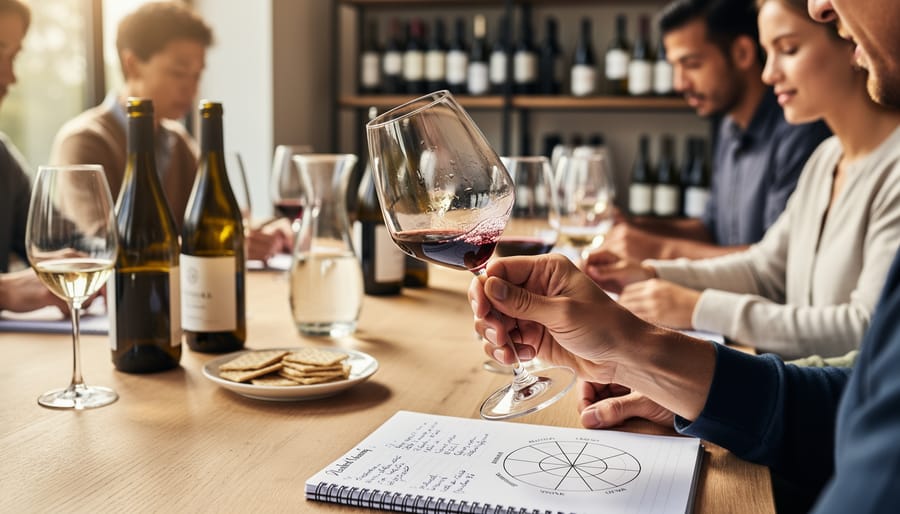
Start simple. Choose one pairing from the chart each week and taste it mindfully. Before your first sip, smell the wine and the food separately. Notice aromatics, then take a bite followed immediately by a sip. Does the wine taste better or worse? Does the food change? That moment of comparison teaches more than any textbook. At-home wine learning shines here because you control the pace and can repeat experiments.
Keep a simple pairing journal on your phone. Note the wine, the dish, whether it worked, and why. “Pinot Noir with salmon, good but could use more acid” tells you something. After a month, patterns emerge about your personal preferences that no chart can predict.
Try the contrast exercise. Pour two different wines and taste them with the same food. A buttery Chardonnay and a crisp Sauvignon Blanc with grilled chicken, for instance. The differences become obvious, training your palate to recognize weight, acidity, and texture interactions.
Most importantly, practice tasting with intention rather than passively drinking. Ask yourself specific questions: Does this wine make my mouth water or dry it out? Does the food linger longer or get wiped clean? These observations build the intuition that transforms you from chart-dependent to genuinely confident.
You now have a pairing chart that works, not because it’s prescriptive, but because it gives you a framework to build on. Use it confidently for your next dinner party or Tuesday night pasta, but don’t let it box you in. The best pairings often happen when you trust your instincts and pay attention to what actually tastes good to you.
Wine pairing shouldn’t feel like homework or create anxiety about making the “wrong” choice. It’s meant to amplify your enjoyment of both the food and the wine, making good meals even better. If a pairing doesn’t work for your palate, that’s valuable information, not a failure.
As you continue exploring, remember that every meal is a chance to learn something new about your preferences. The chart is your starting point, but your own experience will become your best guide over time. Keep experimenting, stay curious, and don’t be afraid to break the rules when your taste buds tell you to.
For more guides on developing your wine knowledge and pairing skills, explore the other resources we’ve gathered to help you drink better without the pretension.